7 Steps in the Only Order That Actually Works
Most failed launches do not die from a bad idea. They die from good steps done in the wrong order — the lease signed before the licenses were checked, the logo before the legal structure, the grand opening before the bank account existed. Starting a small business is a sequence, and the sequence is the strategy. Here are the seven steps in the order that works, drawn from the U.S. Small Business Administration's own guidance.
A sequence is a set of steps in a set order, where each step is done before the next. In this launch, order is not a taste. Order is what makes the next step possible, legal, or cheap. This post goes through each step slowly: what it is, why it sits where it sits, how to do it, and what goes wrong if you skip it or do it late.
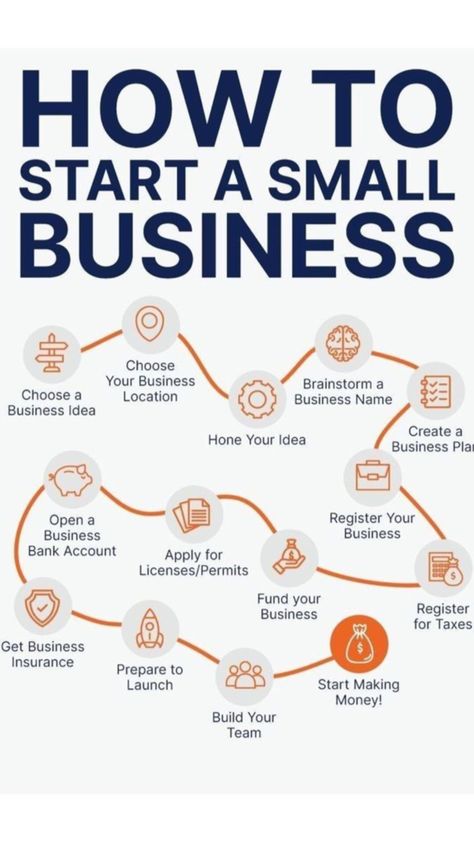
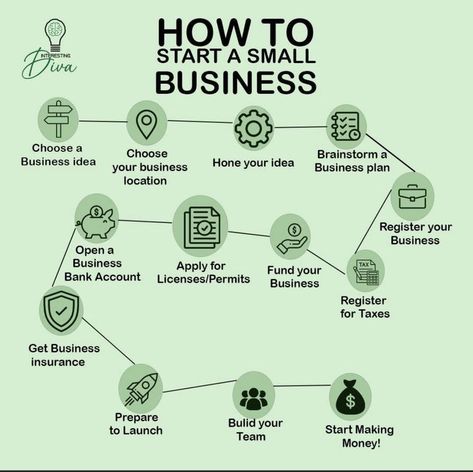
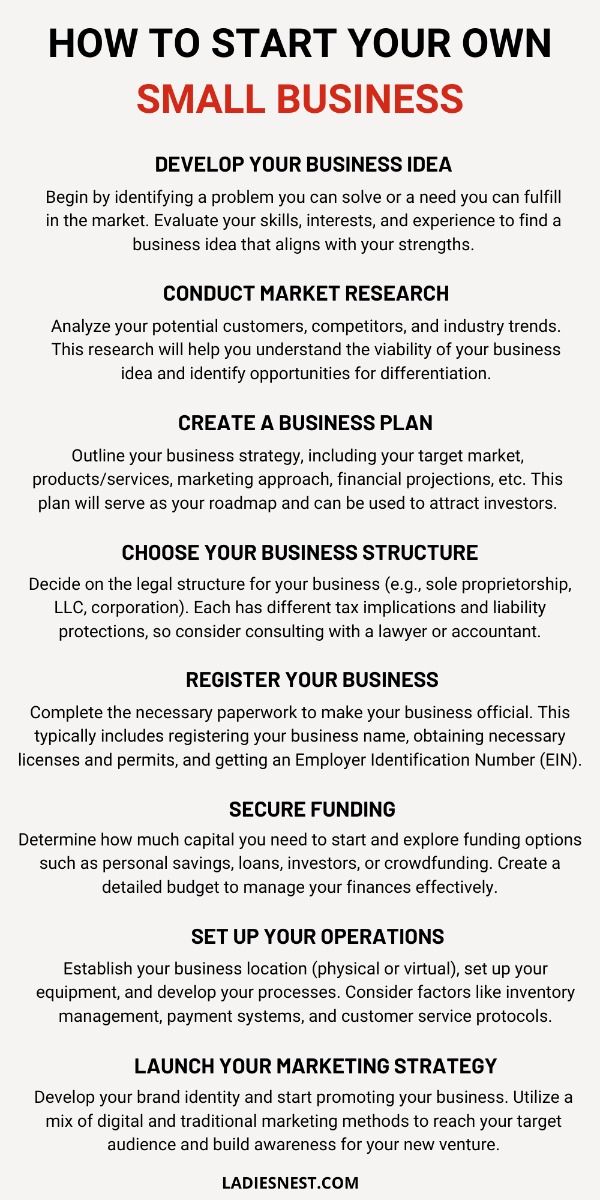
The working order is: (1) research the idea and write a simple business plan; (2) choose your location and legal structure (sole proprietorship, LLC, or corporation); (3) register the business and its name with your state or locality; (4) get your federal and state tax IDs — an EIN from the IRS is free; (5) apply for the licenses and permits your industry and city require; (6) open a business bank account and set up basic bookkeeping; (7) get insured, then build your presence and open. Each step opens the next: you cannot open the right bank account before the EIN exists, and you cannot sign most commercial leases until the entity does.
What the video shows: This video is called "1 Start at $0 in 4 Steps Only You Can Make Yours, how to start a business with no money." It is about how to start a business with no money — beginning at $0, in 4 steps. This post puts the full launch in order: the 7 steps a new business needs, and why the order matters.
Step 1: Research the idea and write a simple plan
Research means learn before you spend. Who has the problem you solve? Who else solves it now, and at what price? What do buyers pay, how often do they buy, and how will they find you?
Talk to real people if you can. Ten short talks with likely buyers teach more than a week of guessing. Ask what they buy now, what it costs them, and what bugs them about it. Write down their words. Do not pitch. Listen.
Then write the plan. The plan does not need to be a novel. One page answering four questions — what you sell, who buys it, what it costs you to deliver, what you charge — will steer every later decision.
Put numbers on that page, and show the math. Say you plan to sell a service for $80. If the direct cost to deliver it — your materials plus the help you pay for that job — is $35, then $80 − $35 = $45 is what is left before rent, taxes, and your own pay. That left-over part is called gross margin in business books. In plain words, it is what is left from each sale after the direct cost of that sale. If that left-over part cannot cover your fixed costs — costs that stay the same each month, like rent — the plan needs a new price, a lower cost, or more sales. Seeing that on page one is the point of the plan. It is far cheaper to fix a number on paper than to fix a lease in real life.
Add three more lines to the page: what you need to start (tools, stock, fees), what you will spend each month to stay open, and how many sales you need each month to cover those costs. If you do not yet know a number, write "not known yet" and how you will learn it. A plan that names its gaps is more useful than a plan that hides them.
If you skip Step 1, every later choice is a guess. You may pick a structure for a business you have not defined, sign for a space your sales cannot support, or set a price that loses money on each sale — slowly, and then all at once.
Step 2: Choose your location and your legal structure
Location here means two things. It means the place you will work from — home, a shop, an office, or online. And it means the city and state whose rules you will live under. A home base has low cost but may have local rules about signs, parking, or work done at home. A rented space gives room and a street presence but locks you into rent each month. Choose the smallest base that lets you do the work well and legally. You can grow into more space. You cannot easily shrink a lease.
Legal structure means the legal form of the business. Legal form decides how taxes are filed, who is liable, and what papers you must keep. Liable means legally responsible — if the business owes money or causes harm, who must pay?
Here are the three forms named in the short answer, in plain words:
A sole proprietorship is a business owned by one person with no separate legal form filed to create it. It is the simplest form. You and the business are the same legal person. That means you are personally liable for business debts. Personally liable means your own money and things can be at risk for what the business owes.
An LLC is a limited liability company. Limited liability means the law treats the company as separate from the owner for most debts, so the owner's personal risk is limited in most cases. An LLC is created by filing with the state, and it has a modest state cost for most owners. It still needs records, taxes, and care — separate is only real if you act separate, with separate accounts and papers.
A corporation is a separate legal body owned by shareholders — people who own shares, or parts, of the company. It fits businesses raising outside money, because shares can be sold to investors. Investors are people who put money in hoping for a return. A corporation has more formal rules: named officers, meeting records, and more tax work.
Choose deliberately, because changing later is possible but never free. A change can mean new filings, new tax IDs in some cases, new bank accounts, and new contracts. If your choice is not clear, this is a wise place to pay for one hour with a local lawyer or tax pro who works with small firms. One hour at Step 2 can save many hours at Step 6.
Think of structure like the frame of a house. You pick the frame before you hang the doors, because the doors must fit the frame. Pick a frame that fits the house you truly plan to build — not the biggest house you can dream of, and not a frame so small that the first storm bends it.
Step 3: Register the business and its name
Register means file the papers that make the business exist in the eyes of the state or locality. Locality means your city or county. For an LLC or corporation, this is the state filing that creates the entity. Entity is a plain-law word for a thing the law treats as separate, like a company. For a sole proprietor using a name other than their own legal name, this often means registering a trade name — the name the business uses in public, which may differ from the owner's legal name.
Do this before you print signs, build a site under that name, or sign papers in that name. First check that the name is free to use in your state and that no close like name will confuse buyers. A name search is cheap. A name change after signs, cards, and contracts are printed is not.
Keep the filed papers in one folder, paper or digital: the filing, the date, and any state ID number you are given. Every later step asks for these papers. The bank asks. The license office asks. A landlord asks. If you cannot find them fast, each later step slows down.
If you skip or rush this step, you may build your whole public face on a name you cannot keep, or sign a lease in a name that has no legal standing yet. Both errors are dull to make and dear to fix.
Step 4: Get your tax IDs — the EIN is free
A tax ID is a number the tax system uses to know who you are. The main federal one for a business is the EIN, which is short for Employer Identification Number. The name misleads people: you can need an EIN even if you have no staff. Banks, tax forms, and many licenses use it to identify the business.
Get the EIN directly from the IRS — free, online, minutes. IRS is short for Internal Revenue Service, the federal tax agency. Go to the IRS site yourself. Do not pay a stranger who found you through an ad that looks like an IRS page. This is the step new owners most often pay for by mistake. The fee they pay buys nothing the IRS was going to charge for.
You may also need a state tax ID, for sales tax or state employer taxes, based on what you sell and where you work. Sales tax is a tax added to some sales, collected by the seller and sent to the state. Check your state's small business site for which IDs your kind of work needs. Write each number in your launch folder, with the date you got it.
Order matters here in a hard way: you cannot open the right bank account before the EIN exists, because the bank uses the EIN to open the account in the business's name. Do Step 4 late, and Step 6 waits. Do Step 4 through a paid copycat, and you paid for a free number and gave your facts to a stranger for no gain.
Step 5: Apply for the licenses and permits you need
A license is permission from a government body to do a kind of work. A permit is permission to do a set act or use a place in a set way. The words overlap in daily use. The point is the same: some work may not legally start until the permission is in hand.
Many cities require a general business license for most firms. On top of that, industries like food, childcare, construction, and cosmetology stack state permits on top. Food work may need health permits. Childcare needs safety and background rules. Construction needs trade licenses. Cosmetology needs personal and shop licenses. Your trade may have its own list. Your city may add zoning rules — rules about what kind of work may be done in that part of town.
Check before you sign a lease, because a space you cannot legally operate in is the most expensive classroom there is. Call the city license office and the state body for your trade. Name your work in plain words and your exact address if you have one in mind. Ask: "What do I need before I open at this address, doing this work?" Write down the name of the person who answers, the date, and each item they name. Then apply, pay the real fees to the real office, and keep each approval in your folder.
This is the hardest step for many new owners, so hear it a second way. A license is like a key cut for one lock. Your general license may open the front door — you may exist as a business in this city. But the back rooms have their own locks: food handling, child care, building trades. Having the front key does not open the back rooms, and working in a back room without its key is what brings fines, forced closure, or a lease you must pay for while you cannot work. Check every lock on your path before you pay for the building.
If you skip Step 5, opening day can become closing day. No plan, price, or logo fixes a business that is not allowed to operate where it sits.
Step 6: Open the business bank account and set up bookkeeping
Open the business bank account the day the EIN lands. Bring your registration papers and your EIN letter. Open the account in the business's name. Then run every dollar of the business through it — every sale in, every business cost out.
Why keep business money separate? Three reasons you can feel in the first month. First, you can see if the business makes money. If rent, food for your home, and business stock all flow through one account, no one — not you, not a tax pro, not a lender — can tell what the business truly earns. Second, taxes get simpler and cheaper to prepare, because the record is already sorted. Third, for an LLC or corporation, mixing money weakens the separation you filed to create. Separate form with mixed money is a weak shield.
Bookkeeping means keeping the record of money in and money out. It does not need fancy tools at the start. A simple ledger — a list with date, what for, amount in, amount out — from transaction one is enough to begin, if you keep it each week. Transaction means one act of money moving: one sale, one bill paid. Keep receipts. A receipt is the paper or digital proof of a transaction. Store them by month. Ten minutes a week beats ten frantic days at tax time.
Clean books are what make loans, taxes, and partners possible later. A lender who cannot read your books will not trust your numbers. A partner who cannot see where money went will not stay calm for long. Start clean, because cleaning old mixed records costs far more than keeping clean ones from day one.
If you skip this step, you lose sight of cash — and cash is the air the business breathes. Many sound businesses die not because no one wanted the product, but because the owner could not see, in time, that more was going out than coming in.
Step 7: Get insured, then build your presence and open
Insurance is a contract where you pay a set fee, called a premium, and the insurer agrees to pay for set kinds of loss if they happen. It does not stop bad things. It stops one bad thing from ending the business.
General liability insurance is the base cover for most firms. Liability here means legal cost and damages if someone is hurt or their property is damaged in connection with your work. Beyond that base, your industry and your landlord may require more: cover for your tools, for work in clients' homes, for a vehicle used for work, or for harm from advice you give for pay. Ask your landlord what the lease requires before you buy. Ask an agent who serves your trade what firms like yours carry, and why. Buy for your real risks, not for fear in general — and do not open with no cover because the quote took a week to get. Get the quote during Step 5 and 6, so cover can start when you do.
Only now the visible part: your Google Business Profile, a simple site, and opening hours the internet can find. A Google Business Profile is the free listing that shows your name, address or area, hours, photos, and reviews when people search or use maps. Presence built last, on top of a legal business, is presence that lasts. Presence built first — logo, posts, grand opening buzz for a firm that has no license or bank account — must be rebuilt when the real papers land with a different name, address, or start date.
Open in a small, controlled way if you can. Serve the first buyers well. Fix the flaws they find while the cost of fixing is still low. Then widen the hours, the ads, and the claims. A soft first week that teaches you your own weak spots beats a loud first day that teaches the whole town.
The order is the insurance
Notice what the sequence protects: you never spend on branding before the entity exists, never sign space before licenses check out, never mix money before the account is open. Each protection is boring. Together they are why some launches wobble and recover while others fold by month three over a $400 surprise.
That $400 surprise in the draft is worth pausing on. A surprise fee does not kill a business by itself. It kills by landing at the wrong time: rent due, stock to buy, no clean books to show a lender, no insurance to cover a loss. Order lowers the number of surprises and raises your power to absorb the ones that remain.
What should you do this week, in real life?
If you are at the start, do Step 1 on paper this week and name the gaps you must research. If your plan is done, pick your structure and get one hour of local advice if the choice is still murky. Then file, get the free EIN from the IRS yourself, and start the license calls — with the address test, before any lease. The day the EIN lands, open the bank account. While permits are in process, get insurance quotes and build the simple ledger. Build your public presence last, with the true name, true hours, and true address.
Keep one launch folder the whole way: plan, filings, tax IDs, license notes and approvals, bank papers, insurance papers. That folder is your proof that the steps were done, and in order. When a bank, landlord, or inspector asks, you will not hunt. You will hand it over.
Honest limits: this post gives the general order used in the United States and drawn from SBA guidance. Your state, city, and trade will add their own fees, forms, and waits, and those details change. The SBA site and your local license office are the sources to trust for your exact list — not a video comment, not a paid form-filing ad, and not this post alone for fine print that decides your case.
Your free tool for this step: the GMB Profile Grader
Step 7 decides whether customers ever find the business you just built. The free GMB Profile Grader on aidcos.world scores your Google Business Profile the way customers see it — categories, hours, photos, reviews, completeness — and names the fixes that move you up the local results. One free signup opens all the Aid & Cos tools.
Use it after the profile is live with true facts. Fix the items it names in order: wrong category first, then hours, then missing photos and details. A complete profile built on a legal, open business earns its keep. A polished profile for a business that cannot yet open does not.
The bottom line
Plan, structure, register, tax IDs, licenses, bank account, insurance and presence — in that order. Do the boring steps in sequence and the exciting step, opening day, gets to stay exciting.
Part of: Court Radar
Keep reading: all Aid & Cos deep-dives